
Solo vs. Chamber Ensemble Performance: What Changes and How to Prepare
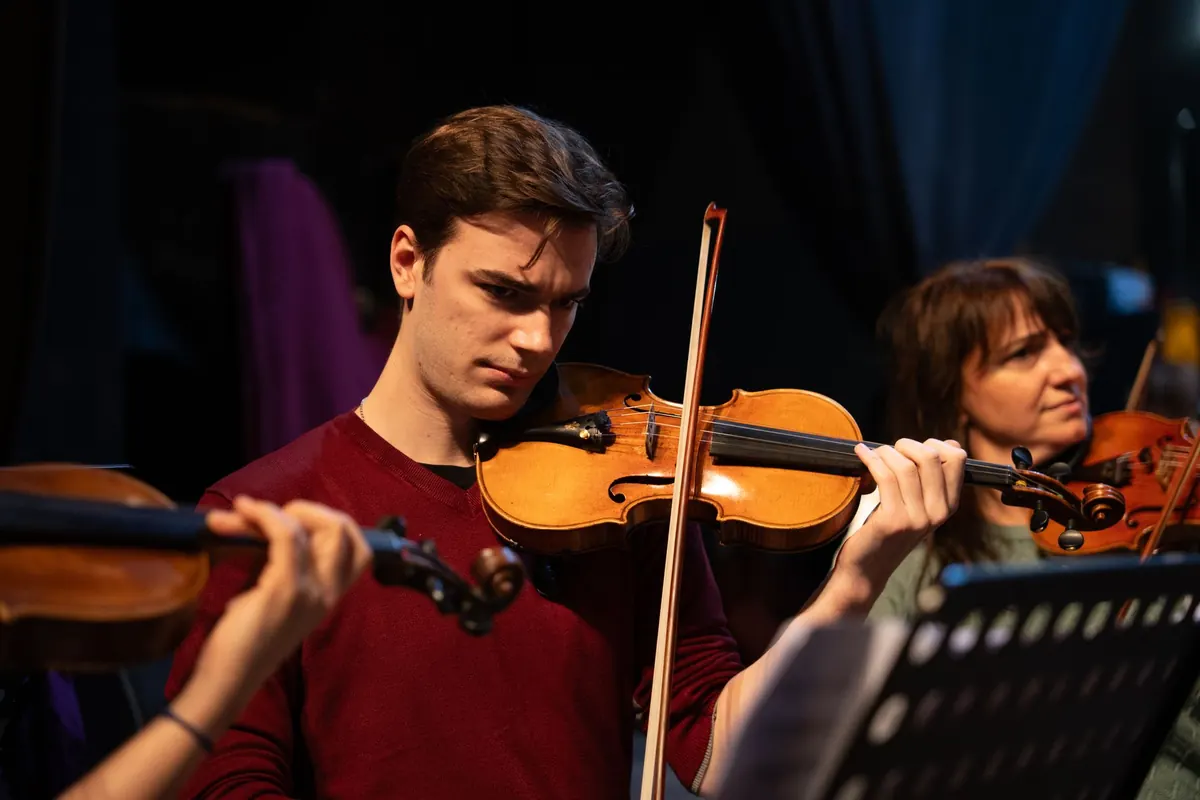
Solo playing and ensemble playing look like the same activity from the audience: someone plays, someone listens. On the inside they are different jobs. Alone, you decide the tempo, the rubato, the colour of a phrase and the shape of the whole arc; the argument is between you and the music. Step into a duo or a quartet and the argument becomes a conversation, with rules nobody has written down. The notes may be easier. The playing usually isn't.
Almost everything you built as a soloist still counts. Tone, rhythm, intonation, the habit of practising slowly and honestly — none of it is wasted. What changes is how those tools are used, and how quickly you have to make decisions. The players who move between the two worlds comfortably are not the ones with the fastest fingers. They are the ones who have learned to listen outward instead of inward.
Same skills, different job description
Take a single fermata. In unaccompanied Bach you hold it as long as the phrase demands, and no one argues. In a quartet, that fermata is a negotiation measured in fractions of a second, settled by a breath, a lifted bow and a glance. You still need taste and instinct. You also need to be able to give up your version of the phrase halfway through it.
A soloist practises control: the sound you intend, produced on demand, every time. An ensemble player practises responsiveness: the sound the moment needs, which may not be the one you planned in the practice room. Both are serious skills. They are trained in different ways, and the second one rarely gets the attention it deserves until the first rehearsal.
Listening: three layers at once
The biggest adjustment is not technical. It is where your attention goes. In chamber music you are tracking at least three things simultaneously, and none of them is optional.
Your own sound, as it actually leaves the instrument
Not the sound you hear under your ear, which is a distorted version of what the room receives. Players who practise only alone tend to overestimate how much sound they are making, or underestimate how much a bright tone carries in a small hall. Record yourself in the rehearsal space once and you will know more than a month of guessing.
The line you are not playing
Know who has the melody at every bar, even when it is never you. Mark those entries in your part in pencil. When you accompany, listen to the solo line as if you were playing it — the shape of the other player's phrase should influence your articulation, your bow distribution, your breathing.
The composite chord
Intonation in an ensemble is a group problem, not a personal one. Tune to the bass note when there is one; it holds the root and everyone else can measure against it. Unisons and octaves are the easiest intervals to hear cleanly, so use them as anchors and check the thirds separately — they sit differently against the root than equal temperament has trained your ear to expect. When something sounds sour, resist the urge to assume it is the other person. Play your note alone, then together, and let the chord settle.
Balance is a moving target
A dynamic marking on the page is relative, not absolute. piano means "softer than what surrounds it", and what surrounds it changes from bar to bar. This is why ensembles that sound well balanced in the practice room can sound top-heavy on stage, and why a passage that worked with one pianist can collapse with another.
Two practical examples. In a piano trio, the piano's sound begins decaying the instant the key is struck, while the strings can sustain and swell. If the cello plays a long crescendo through a chord the piano has already released, the balance inverts halfway through the bar. The string player has to match the piano's attack at the start and let the line fall naturally rather than pushing through it. In a wind quintet, a marking that looks equal can be wildly unequal in practice: the flute at the bottom of its range is gentle and covered, the horn in the middle of its range is not. Someone has to adjust, and it is usually the person with the most headroom.
A few habits that help:
- Find the melody first, then place your line underneath it rather than beside it.
- Keep the core of your tone even when you play softly; thin, airy pianissimos disappear in a texture.
- Give the bass clarity rather than volume — articulation does more for the bottom of a chord than force does.
- Exaggerate the balance once, deliberately, then dial back until the texture just holds together.
- Ask someone in the hall. Balance heard from inside the group is not the balance the audience gets.
Cueing, breathing and the physics of starting together
A cue is a physical preparation followed by a sound, and the preparation matters more than the sound. The upbeat arrives before the beat, which means your body has to commit a moment early. String players lift the bow; wind players breathe in and raise the instrument; keyboard players nod or lift a hand clear of the keys; singers take an audible breath. Whatever the gesture is, it must be visible from the side, not just from the front, and it must be identical every time you rehearse it — a cue that changes shape in performance is not a cue, it is a surprise.
Receiving is a separate skill. Use peripheral vision rather than turning your head, and know in advance who leads what: the tempo change in bar 34, the entry after the long rest, the final chord, the cut-off. Rests deserve real practice. Count them aloud at home, sing your entry silently, and learn what happens in the other parts during the bars you are not playing. Silence with a map in your head is very different from silence with a hope.
Rehearsal preparation that transfers to the concert
Rehearsals go badly when they become performances with stopping. A workable shape for each session:
- Learn your part before you arrive. Not to perfection — to the point where you can play it while listening to something else. If you are still reading the notes, you cannot hear anyone.
- Mark your part with the other voices. Entries, melody assignments, tempo changes, the bar where the cello takes over. Write in pencil, and write in the room rather than trusting memory.
- Rehearse in layers. Rhythm and ensemble first, then intonation, then balance, then character. Fixing phrasing on top of a shaky pulse wastes everyone's time.
- Agree on how you will stop. Someone calls the bar number, someone else says what went wrong. Keep it short and specific, and never let a discussion run past two minutes.
- Run the movement without stopping, at least once per session. Recovery is a skill, and it only develops when stopping is not an option.
- Practise starting from anywhere. Take turns choosing a random bar and giving the upbeat. It exposes weak corners faster than a full run-through.
- Record and listen back together. Balance and ensemble problems that survive an argument usually dissolve in thirty seconds of playback.
What to practise alone for a job you do together
You can prepare ensemble playing without a partner. Play long tones against a drone and listen for the beat rate in the thirds and fifths. Play along with a recording and take the inner line rather than the melody. Practise your part at three dynamic levels without changing your articulation, so that playing softer never means playing weaker. Learn the other parts badly on the piano and sing them: it changes how you hear the piece for good.
There is a mental shift too, and it is worth naming. In a group, the piece is the boss, not any single player. The player who can say "that was my fault, let's take it from bar 52" without embarrassment, and who can also accept a better idea from someone else, tends to be the one everyone wants to work with.
A short checklist before your next rehearsal
- Part learned well enough to listen while playing?
- Other voices' entries and melody marks pencilled in?
- Three bars you know are weak, identified in advance?
- A plan for who leads each tempo change and each entry after a rest?
- Pencil, eraser, and a recording device?
- One question you want the group to answer today?
Arrive with those six things settled and the rehearsal stops being a search for problems. It becomes what it should be: a room full of people listening hard to each other, gradually agreeing on the same piece.
Photo: Božo Gunjajević / Pexels