
Italian Folk Songs for Beginner Accordion: Sheet Music Sources and Practice Steps
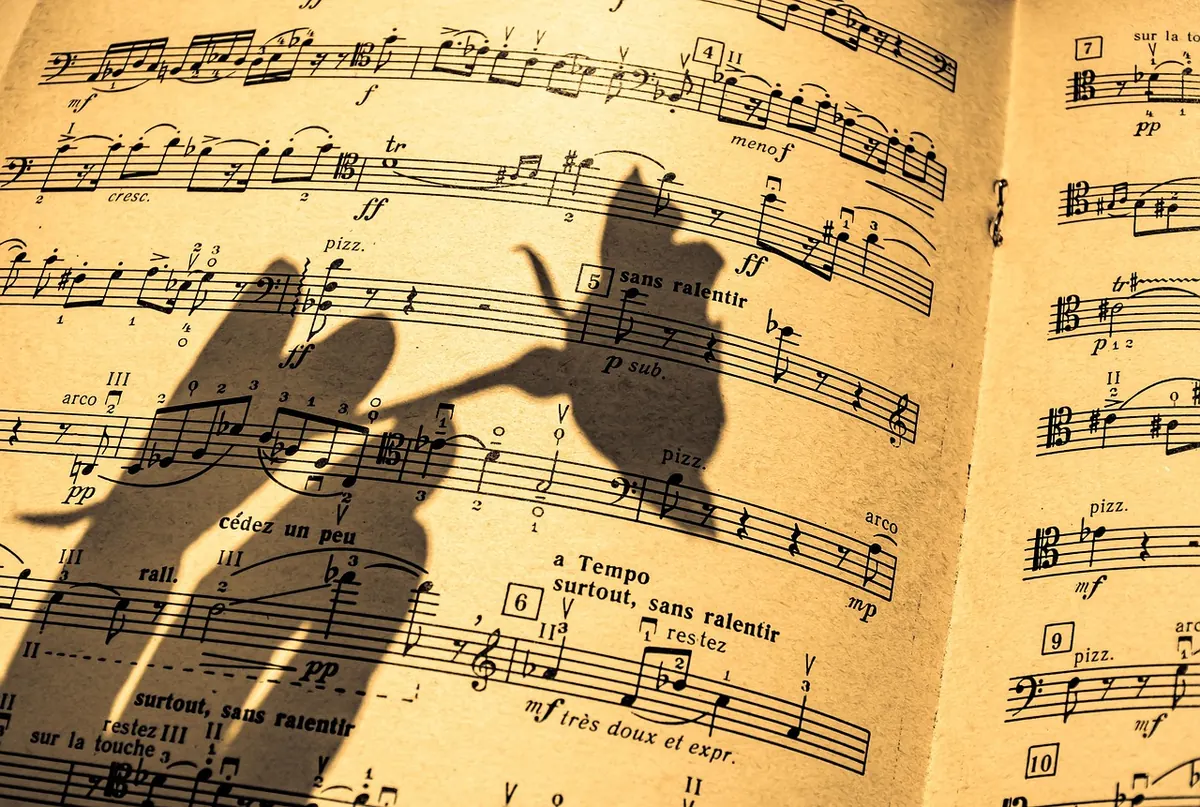
Italian folk music and the accordion grew up in the same streets. The instrument arrived in the nineteenth century and was absorbed almost at once into village dances, wedding processions and the ballo liscio that filled the dance halls of Romagna. That history is good news for a beginner: much of this repertoire was made by players who worked by ear, in keys the accordion likes, with phrases short enough to sit inside one breath of the bellows.
What follows is a practical route in — which pieces to try first, where to find scores you can trust, and how to practise the two things that separate a stiff run-through from something people want to dance to.
Why this repertoire suits a beginner's hands
Most of these tunes sit in keys that fall naturally under the right hand: C, G, F, D minor, B flat. The melodies move mostly by step, with a few leaps that repeat from verse to verse, and the phrases are square — four bars, then another four answering them — so you always know where you stand. That is a gentler introduction to reading than a nineteenth-century study in six flats.
The left hand benefits too. A tarantella, a polka, a mazurka and a waltz each bring their own rhythmic pattern, and those patterns are the bass. Learn one oom-pa for the polka and a large part of the repertoire opens up. A waltz asks for bass on one, chord on two and three; a mazurka puts its accent on the second beat, which gives the music its slight limp; a tarantella runs in a quick six-eight with a bass pattern that repeats until it feels like a heartbeat. On a 48-bass instrument you can play most of these in C, G, F and D minor without ever reaching for a chord that is not there.
There is one trap. The field recordings that made this music known — singers and players from the south, the Alps and the centre — are full of ornaments, slides and free timing. Beautiful, and well beyond a first year. Start with written arrangements that give you the skeleton, then add ornaments one at a time once the skeleton stands on its own.
If a written arrangement sounds suspiciously smooth or harmonically fussy, sing the tune without the chords. If the melody still makes sense, the arrangement is probably honest; if it collapses, the chords are doing work the tune should do itself.
Five pieces worth starting with
- “Santa Lucia” (Teodoro Cottrau, Naples). A gentle 3/4 with a small range and a clear two-part shape — a good home for your first waltz bass. Keep the left hand to bass–chord–chord and let the melody breathe at the end of each phrase.
- “Bella ciao”. Short phrases, few chords, and a melody most listeners already know, which is forgiving when your attention is on the bellows rather than the notes. It is also useful for learning to keep the tempo steady when the tune becomes familiar.
- “Funiculì funiculà” (Luigi Denza). Livelier, in 6/8. Take it at half speed for a month; the repeated rhythm is the point, not the tempo. Count the six quavers in two groups of three and do not let the bellows turn at the bar line out of habit.
- “La Montanara”, from the Trentino song repertoire. A broad triple-time melody that rewards long, even bellows and teaches a four-bar swell that does not speed up. Play it once with no ornaments at all; the shape of the phrase is the lesson.
- A tarantella — “Tarantella Napoletana” is the usual entry point. Learn the right hand alone first, and bring in the left only when the melody is secure. The left hand should feel like a light engine underneath, not a second melody competing for attention.
If you want something slower still, look for a ninna nanna or a stornello: lullabies and short improvised verses are usually two or four phrases long and are pure practice in legato. A good rule is to choose one fast piece, one slow piece and one dance rhythm at a time. Three tunes studied properly will teach you more than ten tunes skimmed.
Where to find scores you can trust
Printed editions first
A bought edition normally gives you fingering, bellows marks and a named source. The larger Italian houses — Ricordi, Curci, Bèrben — carry accordion methods and arranged song collections, and a good music shop can order them. When asking, use the words metodo per fisarmonica or raccolta di canti popolari; that is more precise than asking for “Italian folk songs” and hoping for the right level. Alongside those, keep one anthology of folk melodies with words and a single vocal line: Tommaseo's Tuscan collection from 1841 or Nigra's Piedmontese collection from 1888 are the classic references. They are not accordion arrangements, but they let you check whether an arrangement has drifted away from the tune.
Archives, libraries and local bands
Regional folk archives, conservatory libraries and the library of your local banda often hold handwritten dance books and old printed quadrilles. These are worth asking about in person. A band librarian may know which old polkas were played at a particular feast, and that kind of local detail is often missing from commercially published collections. For listening, the Alan Lomax and Diego Carpitella recordings made in Italy in 1954–55 and later issued as the Italian Treasury series are a dependable reference for how the music breathes — not for note-perfect copying.
What to check before you trust a page
- Bellows direction marked, at least at the phrase ends.
- Chords written as button names (“C maj”, “A min”) rather than piano-style notation.
- A key that fits your instrument: on a 48-bass, chords such as B major or F sharp minor simply are not there.
- The melody inside your comfortable range, with no long stretches at the very top.
- A stated source — region, collection, singer. Anonymous arrangements floating around online often add chords nobody plays.
- A bass line that supports the dance rhythm rather than filling every bar with changes.
- Lyrics included, if the piece began as a song; the words often explain where the phrase should breathe.
Reading a folk score like an accordionist
Before playing a note, mark the page. Draw a light vertical line at each phrase end and decide where the bellows will turn: at a rest or the close of a four-bar group, never in the middle of a held note. Write “in” and “out” above the staff for the first few readings, then erase the marks once your hands remember. In a waltz such as “Santa Lucia”, for example, you might turn after the fourth bar and again after the eighth, so the phrase ends with the bellows comfortably closed or open rather than stranded halfway.
Then look at the ornaments and keep only one, at the cadence. On a beginner instrument, a single grace note placed cleanly will do more than four smudged ones. As for registers, practise on a thin single-reed setting so mistakes are audible; save the fuller musette sound for when the piece is stable. A dry tuning also makes it easier to hear whether your left hand is arriving a fraction late after a bellows turn.
Practice steps for phrasing and bellows control
- Listen twice, sing once. Find two recordings, ideally an old field recording and an accordion version. Then sing the tune. Phrasing starts in the voice; if you cannot breathe in the right place, the bellows will not find it either.
- Mark the phrases. Count the four-bar units out loud, clap the rhythm and note where the melody rests.
- Bellows before notes. Two minutes daily: hold one comfortable note eight counts out, eight counts in, at a steady volume, watching that the tone does not sag or surge. Then do the same while moving one finger; the goal is to keep the left arm calm while the right hand changes notes.
- Right hand alone, slowly. Play the melody without the bass, with a metronome at a speed where you can still hear the phrase shape. If you make a mistake, repeat the bar twice, then rejoin the phrase; do not restart the whole piece every time.
- Add the bass in two-bar blocks. Learn the left hand in small pieces, then join them to the right hand one phrase at a time. If the hands fall apart, the block is too long, not the tempo too slow.
- One ornament at the cadence. Add it only when the plain melody is secure. A clean appoggiatura or a single grace note is enough; the point is to mark the phrase ending, not to decorate every bar.
- Record and compare. Record one verse on your phone. Listen for two things only: where the tempo moved and where the bellows turn interrupted the phrase. Then play it again without fixing anything else.
A four-week plan that keeps you moving
Week one: choose one slow piece and one dance piece. Mark phrases, decide bellows turns and play the right hand alone every day. Week two: add the left hand in two-bar blocks, but keep the metronome slow enough that you can hear both hands clearly. Week three: put the hands together in four-bar sections and begin each session with the bellows exercise. Week four: add one ornament at the final cadence, record the piece and play it once for another person.
Keep the sessions short and specific. Fifteen minutes of bellows control, right-hand phrasing and two-bar joins will do more than an hour of repeated run-throughs. If a piece stops improving, put it away for a week and learn a ninna nanna instead; the change of tempo often solves a problem that more repetition cannot.
Building a tune book you will actually use
Keep a simple folder or notebook with one page per tune. At the top write the title, region and source; below it, note the key, the bass pattern, the bellows turns and the one ornament you have chosen. Add a line about tempo — “waltz, steady, no rush at the cadence” — because memory is unreliable when you return to a piece after a month. This small habit turns scattered sheets into a repertoire you can actually maintain.
It also helps you listen more sharply. When you hear a local band or an old recording, you can note a detail beside the tune: a different chord at the end of the verse, a slower mazurka lilt, a singer who holds the last note longer. Those notes are the beginning of your own style, and they are much easier to trust than an anonymous arrangement found online.
Play the tune for someone else before you think it is finished. A listener will tell you where the phrase dies or the tempo drags far more honestly than a practice-room mirror.
Photo: Ri_Ya / Pixabay