
Beginner Guide to Counting Eighth Notes and Rests
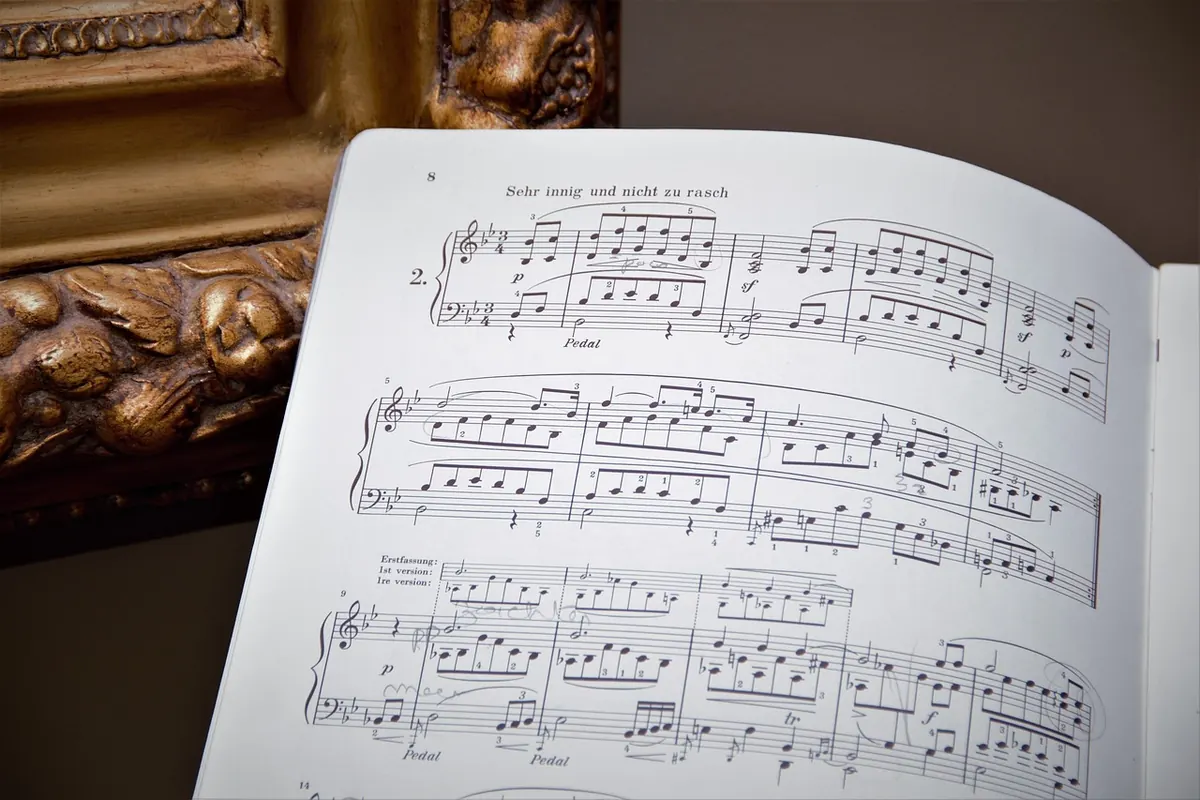
Eighth notes look harmless. They are small, usually beamed together in pairs, and they take up very little space on the page. Then you try to play a bar of them at a steady tempo and discover that the beat has a middle, and that you have to land in it.
That middle is what this guide is about. Half a beat is not difficult to understand; it is difficult to feel consistently. The good news is that counting eighth notes and eighth rests is a physical skill more than an intellectual one, and it responds quickly to short, regular practice. Five focused minutes a day will do more than an hour on Sunday afternoon.
What an Eighth Note Really Is
If a quarter note gets one beat — one tap of your foot — then an eighth note gets half of that beat. Two eighth notes fit inside a single beat. In 4/4 time you get eight of them in a bar, and they are normally joined at the top by a beam rather than each carrying its own flag. A single eighth note standing alone keeps its flag; a pair or a group is beamed together.
The beam is not decoration. It shows you which notes belong to the same beat, and that grouping is the most useful reading clue on the page.
An eighth rest is silence of the same length: half a beat. It looks like a small "7" with a filled-in head at the upper left. At first glance it is easy to confuse with a quarter rest, which is the squiggly one, so check the shape.
The vocabulary you need first:
- Beat: the steady pulse, the number you count.
- Subdivision: the smaller division inside the beat — here, the "and".
- Downbeat: the first beat of the bar.
- Offbeat: the "and" that falls between two numbers.
Count Out Loud, Always
Start by speaking. Counting aloud feels childish for about two minutes, and then stops feeling childish the moment you try to clap a rhythm without it.
The pattern for a full bar of eighth notes in 4/4 is:
1 and 2 and 3 and 4 and
Say it evenly. The numbers land with your foot tap; each "and" falls exactly halfway between taps. Keep the numbers strong and slightly longer, the "and" lighter and shorter. Not because the notes are played differently, but because that weight keeps the pulse audible to you and to anyone listening.
Set a metronome to a comfortable tempo, around 60 beats per minute, and let it click only on the numbers. Do not set it to click on the eighth notes. You want your voice and your foot to supply the subdivision, not the machine — otherwise you end up following a click instead of holding a pulse.
The foot-tapping trap
Most beginners tap their foot on every eighth note, which doubles the apparent tempo and destroys the reference point. Tap once per beat and let the "and" live in the gap. If that gap feels vague, tap your foot on the numbers and a finger on the "and" for a few bars. Once hand and foot agree, drop the finger.
Counting Eighth Rests Without Losing the Pulse
A rest is not a pause in the music; it is a note you do not play. The counting continues through it at exactly the same speed.
Take a simple pattern in 4/4: an eighth note on beat one, an eighth rest on the "and" of one, then eighth notes through beat two. You say "1 and 2 and"; you play on 1, rest on the "and", play on 2 and. The temptation is to let that "and" vanish — the rest swallows the syllable — and the next note arrives early. Fight it by saying the "and" aloud even when your hands are still. A useful trick is to whisper the rests: your mouth keeps the subdivision running while your instrument stays silent.
An eighth rest can sit in two positions, and they feel quite different:
- Rest on the beat: the bar begins with silence and your first note lands on the "and". Count the beat, hear it, then play.
- Rest on the offbeat: you play on the number and release. This is easier to feel but easy to shorten, so let the note ring for its full half beat before the silence.
Four Exercises for the Week
- Clap and count. Find four bars of eighth notes in 4/4. Count aloud and clap only where notes appear, at 60 bpm. Repeat until you can do it without watching your hands.
- Silent "and". Same four bars, but say only the numbers aloud and think the "and" silently, tapping it with a finger. Then reverse: whisper the "and" and think the numbers. Both directions expose which layer you are leaning on.
- One-line rhythm reading. Take a page of rhythm exercises or a single line from a piece you know. Count through it without playing, then play it on one note. Removing pitch removes half the problem.
- Metronome on the offbeats. Harder, and worth it: set the click so it falls between your numbers. If the numbers stay steady while the click lands in the gap, your internal pulse is doing the work.
Ten minutes in total. Do not extend it; simply do it again tomorrow.
Read Groups, Not Individual Notes
When you look at a bar of beamed eighth notes, do not read eight separate symbols. Read the beams. In 4/4, eighth notes are beamed in pairs or in groups of four; a pair spans one beat, a group of four spans two. Either way, each beam group tells you where the beats are.
Watch for these shapes, which come up constantly:
- Two beamed eighths: play, play, one beat. The most common pair in music.
- Dotted quarter plus eighth: the long note takes a beat and a half, the short one lands on the "and" of the second beat. Count "one, two-and" and the short note is that "and".
- Eighth, eighth rest, eighth, eighth: the middle of the bar goes quiet without ever stopping.
- Tied eighth across the barline: the second note is not played again; the first is simply held through. Count the tie as if the note were there.
Before you play a new bar, count it once out loud with no instrument in your hands. Two seconds of counting saves a minute of guessing.
Mistakes Worth Catching Early
- Rushing the offbeat. Almost universal. Slow the metronome until the "and" sits exactly in the middle of the beat.
- Tapping on the subdivision. Worth repeating: one tap per beat, not two.
- Counting only when lost. Counting is a habit, not a rescue.
- Practising fast first. Speed hides unevenness; slow practice exposes it and fixes it.
- Skipping the rests. Play the rests as actively as the notes — same length, same attention.
A Ten-Minute Daily Routine
This fits into a warm-up and needs no special materials.
Minutes 1–2: metronome at 60, count "1 and 2 and 3 and 4 and" aloud for eight bars, tapping your foot on the numbers only.
Minutes 3–5: clap two bars of a rhythm you find awkward — pick one with an eighth rest on a beat — until it becomes boring.
Minutes 6–8: play that same rhythm on a single note, then on your instrument with the real pitches.
Minutes 9–10: metronome off. Count the first two bars of a piece you are studying, out loud, before playing them once.
Keep a pencil nearby and mark every rest you miss. Within a week the marks will show you exactly which position — on the beat or off it — is still costing you. That is the whole method: find the weak spot, count it slowly, then let the tempo do the rest.
Photo: niekverlaan / Pixabay